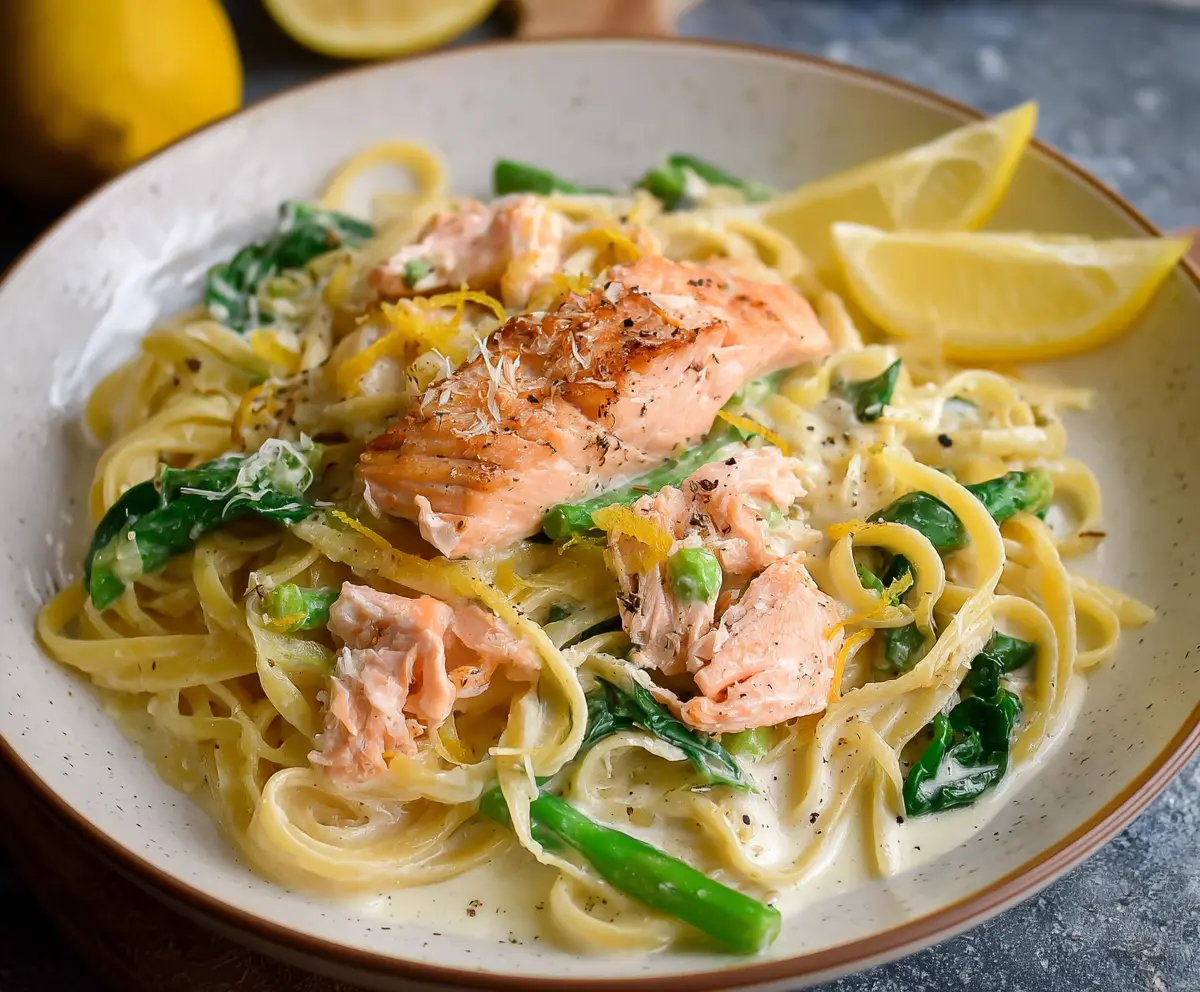
Salmon Pasta with Lemon Cream Sauce is a delightful dish that brings together tender salmon, creamy sauce, and a bright hint of lemon. The pasta is perfectly coated in a rich, smooth sauce that gives the dish a fresh and comforting feel, while the salmon adds a juicy, flaky texture that makes every bite satisfying.
I love making this dish when I want something that feels a little special but is still easy to put together. The lemon cream sauce is where all the magic happens—it’s zesty but mellow at the same time, and it makes the pasta taste light instead of heavy. I usually use fresh lemon juice for that extra zing, and it never fails to brighten the whole meal.
One of my favorite ways to serve this salmon pasta is with a simple green salad on the side and some crusty bread to soak up the leftover sauce. It’s the kind of dinner that’s great for a cozy night in or even for sharing at a casual dinner with friends. Every time I make it, it feels like a little celebration on a plate!
Key Ingredients & Substitutions
Salmon: Fresh salmon fillets are best for a tender, flaky texture. If fresh isn’t available, frozen works too—just thaw completely first. For a milder flavor, try using trout or even cooked shrimp instead.
Lemon: Fresh lemon juice and zest give this sauce its bright, fresh flavor. Bottled lemon juice can be used in a pinch, but the zest is best fresh. If you want less tang, reduce the juice slightly.
Heavy Cream: This makes the sauce rich and smooth. For a lighter version, substitute half-and-half or a mix of milk and cream cheese, but the sauce won’t be as thick or creamy.
Parmesan Cheese: Parmesan adds a salty, nutty touch. You can swap this with Pecorino Romano or Asiago if you prefer a sharper taste.
Spinach and Asparagus: These fresh veggies add color and a bit of crunch. Feel free to switch in peas, broccoli, or green beans if you want a different veggie or need what’s on hand.
How Can I Cook Salmon Perfectly Without Overcooking?
Salmon cooks quickly, so it’s important to watch it closely for the best texture.
- Pat salmon dry and season well before cooking for a nice crust.
- Cook skin-side down first; it helps protect the fish and adds flavor.
- Cook about 4-5 minutes per side on medium heat, depending on thickness.
- Salmon is done when it flakes easily but is still moist inside.
- Remove from heat a little early as it continues to cook while resting.
Equipment You’ll Need
- Large pot – for boiling pasta; a bigger size helps avoid sticking.
- Large skillet or sauté pan – perfect for cooking salmon and making the sauce in one pan.
- Tongs or spatula – to flip salmon gently without breaking it.
- Grater or zester – to get fresh lemon zest, which brightens the sauce.
- Wooden spoon or silicone spatula – to stir sauce smoothly without scratching the pan.
- Colander – to drain pasta easily.
Flavor Variations & Add-Ins
- Swap salmon for shrimp or scallops for a different seafood flavor that also cooks quickly.
- Add sautéed mushrooms or sun-dried tomatoes for extra umami and texture.
- Mix in fresh herbs like dill or basil to add a fresh, herbal note.
- Use creamy goat cheese instead of Parmesan for a tangy twist in the sauce.
Salmon Pasta with Lemon Cream Sauce
Ingredients You’ll Need:
- 8 oz fettuccine or linguine pasta
- 2 salmon fillets (about 6-8 oz each)
- Salt and freshly ground black pepper, to taste
- 2 tablespoons olive oil
- 2 cloves garlic, minced
- 1 cup heavy cream
- Zest and juice of 1 lemon
- 1/2 cup grated Parmesan cheese
- 1 cup fresh spinach leaves
- 1/2 cup green asparagus, cut into 2-inch pieces
- 1 tablespoon butter
- Lemon wedges for garnish
Time Needed:
This dish takes about 25-30 minutes from start to finish. You’ll spend around 10 minutes preparing and cooking the salmon and veggies, about 10 minutes cooking pasta, and a few extra minutes combining everything and finishing the sauce.
Step-by-Step Instructions:
1. Cook the Pasta:
Fill a large pot with salted water and bring it to a boil. Cook the pasta according to package directions until just tender (al dente). Before draining, reserve about 1/2 cup of the pasta water to use for the sauce. Drain the pasta and set aside.
2. Cook the Salmon:
While the pasta cooks, season both sides of the salmon fillets with salt and pepper. Heat olive oil in a large skillet over medium heat. Place the salmon skin-side down and cook for 4 to 5 minutes per side until the fish is cooked through and golden. Remove the salmon to a plate and let cool briefly, then gently flake it into large chunks.
3. Make the Lemon Cream Sauce and Combine:
In the same skillet, add butter and melt over medium heat. Add minced garlic and sauté until fragrant, about 30 seconds. Pour in the heavy cream, then add lemon zest and juice. Stir gently and bring the sauce to a simmer. Mix in the grated Parmesan cheese until melted and smooth. If the sauce feels thick, add a little of the reserved pasta water until it reaches your preferred consistency.
Add the asparagus to the sauce and cook for 2 to 3 minutes until tender-crisp. Stir in the fresh spinach and cook just until wilted. Add the cooked pasta and toss well to coat in the sauce. Finally, fold in the flaked salmon carefully to keep the pieces intact. Taste and adjust seasoning with salt and pepper if needed.
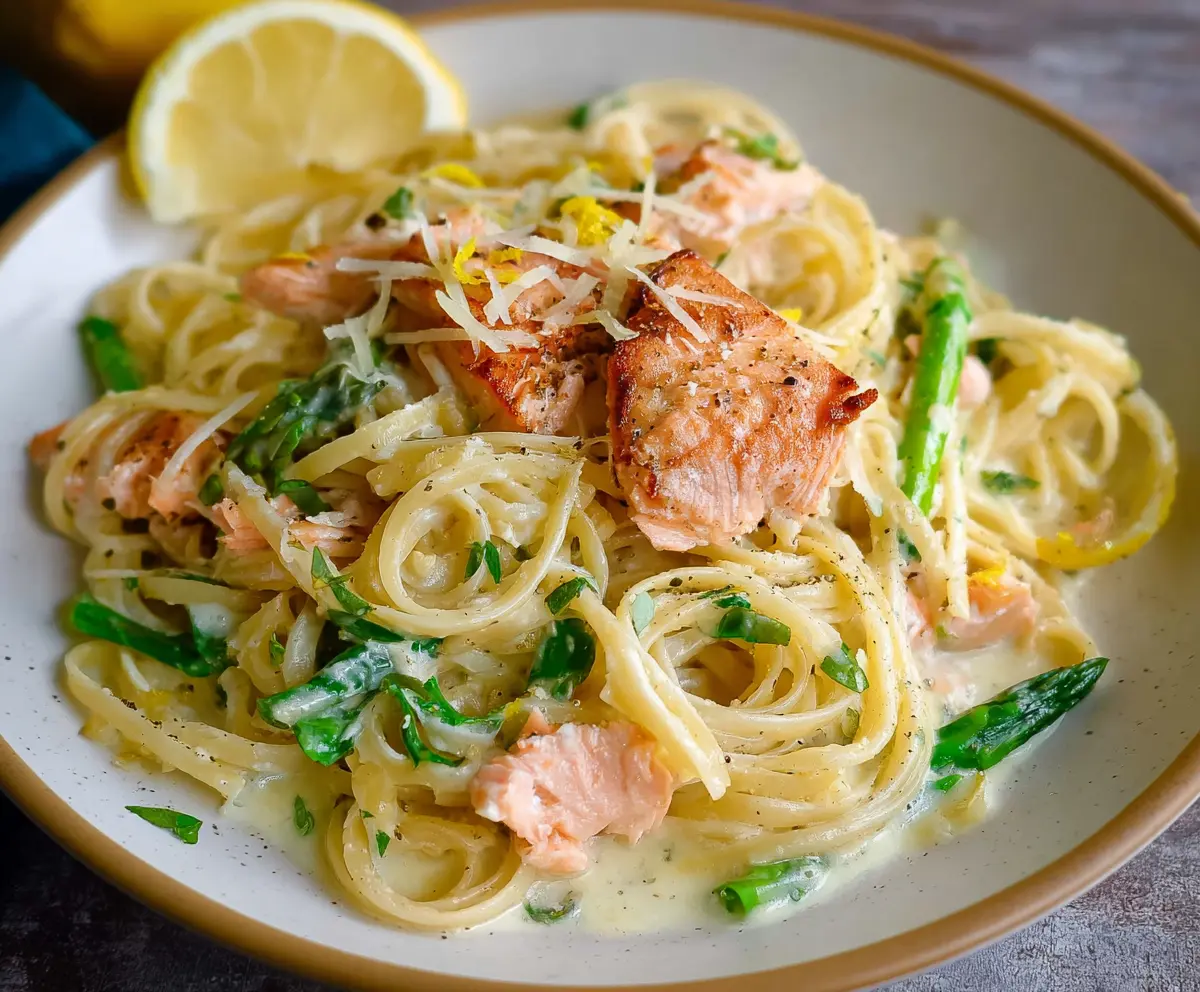
Serve the pasta topped with a little extra lemon zest and lemon wedges on the side for squeezing. If you like, sprinkle additional Parmesan cheese over the top.
Enjoy your tasty, creamy Salmon Pasta with Lemon Cream Sauce!
Can I Use Frozen Salmon for This Recipe?
Yes! Just make sure to fully thaw the salmon in the refrigerator overnight before cooking. Pat it dry to remove any excess moisture for better browning.
How Can I Make This Dish Lighter?
Try using half-and-half or whole milk instead of heavy cream, but note the sauce will be less rich and creamy. You can also reduce the amount of butter and cheese to lighten it up.
Can I Prepare This Meal in Advance?
You can cook the salmon and pasta ahead of time separately and store them in the fridge for up to 2 days. Reheat gently and prepare the sauce fresh to keep it creamy and fresh-tasting.
What’s the Best Way to Store Leftovers?
Keep leftovers in an airtight container in the refrigerator for up to 3 days. Reheat gently on the stove or in the microwave, adding a splash of cream or pasta water to loosen the sauce if needed.