
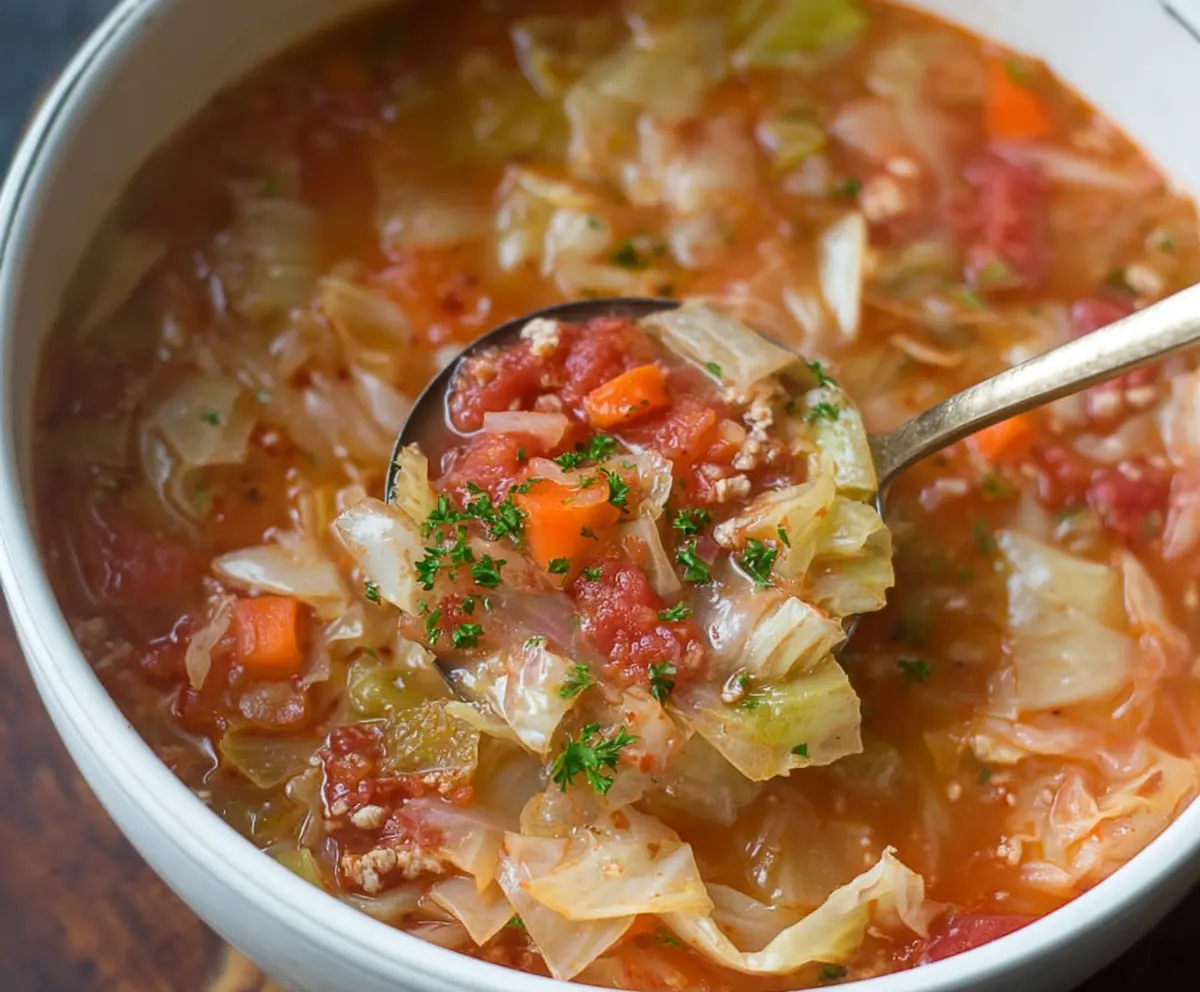
Classic Cabbage Soup is a simple, comforting bowl filled with tender cabbage, carrots, onions, and a flavorful broth that warms you up from the inside out. It’s light but hearty, with just the right mix of veggies you probably already have on hand. The subtle sweetness of the cabbage and the gentle spices make it feel like a cozy hug in a bowl.
I love making this soup when I want something easy and healthy but still really satisfying. It doesn’t take long to come together, and you can always tweak it by adding your favorite herbs or a splash of lemon juice for a little zing. One tip I have is to let it simmer a bit longer if you like the cabbage super soft—it gets tastier the longer it cooks!
My favorite way to enjoy Classic Cabbage Soup is with a piece of crusty bread for dipping or a handful of crackers on the side. It’s that kind of recipe that feels like home, perfect for chilly evenings or whenever you need a low-key meal that’s still full of flavor. I always find myself coming back to it whenever I want something familiar and soothing.
Key Ingredients & Substitutions
Cabbage: Green cabbage is the star here. It gives the soup a mild, slightly sweet flavor and soft texture when cooked. You can substitute with Napa cabbage or savoy cabbage for a different texture but similar taste.
Broth: Vegetable broth works great for a light, vegetarian soup. If you prefer more depth, chicken broth adds richness without overpowering the flavors. Homemade or store-bought both work fine.
Tomatoes: Canned diced tomatoes keep the soup bright and add a bit of acidity. If fresh tomatoes are in season, peel and dice them for a fresher taste, though canned is easier year-round.
Herbs and Seasonings: Thyme and bay leaf bring subtle earthiness. Feel free to swap thyme with oregano or add a pinch of smoked paprika for a smoky twist. Fresh dill at the end is optional but adds a nice fresh note.
How Do You Get Tender But Not Mushy Vegetables in Cabbage Soup?
Cooking vegetables in soup requires balance—you want them soft but not falling apart. Here’s how:
- Sauté onions, garlic, carrots, and celery first to start the flavor base without overcooking.
- Add cabbage later and cook just until it wilts, about 3-4 minutes before adding broth.
- Simmer the soup uncovered to let the vegetables cook evenly and the broth reduce slightly for richer taste.
- Check texture near the end and remove from heat when veggies are tender but still hold shape.
This approach keeps your soup hearty with pieces that aren’t mushy, making every spoonful enjoyable.
Equipment You’ll Need
- Large heavy-bottomed pot – It cooks the soup evenly and holds heat well for a steady simmer.
- Wooden spoon – Great for stirring without scratching your pot.
- Sharp knife – Makes chopping cabbage, carrots, and onions quick and easy.
- Cutting board – Provides a stable surface to chop your veggies safely.
- Ladle – Perfect for serving hot soup into bowls without spills.
Flavor Variations & Add-Ins
- Add cooked sausage or diced ham for a meaty boost that adds extra heartiness.
- Stir in fresh spinach or kale near the end for a vitamin-packed green twist.
- Use smoked paprika or chili flakes for a bit of warmth and spice if you like a kick.
- Top with grated Parmesan or crumbled feta for a salty, cheesy finish that brightens the soup.
How to Make Classic Cabbage Soup?
Ingredients You’ll Need:
Vegetables and Aromatics:
- 1 medium head of green cabbage, chopped into bite-sized pieces
- 1 large onion, diced
- 2 cloves garlic, minced
- 3 medium carrots, peeled and diced
- 3 ribs celery, diced
Other Ingredients:
- 2 tablespoons olive oil
- 1 can (14.5 oz) diced tomatoes with juice
- 6 cups vegetable broth (or chicken broth for non-vegetarian)
- 1 bay leaf
- 1 teaspoon dried thyme
- Salt and freshly ground black pepper, to taste
- Fresh dill, chopped, for garnish (optional)
- Optional: splash of lemon juice or vinegar to brighten flavor
Time Needed
You’ll spend about 15 minutes preparing the vegetables and sautéing them, then about 30 to 40 minutes simmering the soup for flavors to develop and vegetables to become tender. Total time is roughly 45 to 55 minutes.
Step-by-Step Instructions:
1. Sauté the Aromatics and Veggies
In a large pot, heat the olive oil over medium heat. Add the diced onion and cook, stirring, until it turns translucent—about 4 to 5 minutes. Then add the minced garlic, carrots, and celery. Cook these for another 5 minutes, stirring occasionally, until the vegetables start to soften.
2. Add the Cabbage & Liquids
Next, stir in the chopped cabbage and cook for 3 to 4 minutes until it begins to wilt. Pour in the diced tomatoes with their juice and the broth. Toss in the bay leaf and dried thyme, and stir everything well to combine.
3. Simmer Until Tender and Flavorful
Bring the soup to a boil. Then reduce the heat to low and let the soup simmer, uncovered, for about 30 to 40 minutes. During this time, the flavors will meld and the vegetables will become tender but still hold their shape.
4. Final Seasoning and Serving
Season the soup with salt and freshly ground black pepper to your taste. Remove and discard the bay leaf. Optionally, add a splash of lemon juice or vinegar to brighten the flavor just before serving. Ladle the soup into bowls, sprinkle with fresh chopped dill if you like, and enjoy hot!
Can I Use Frozen Cabbage for This Soup?
Yes, you can use frozen cabbage, but be sure to thaw it completely and drain any excess water before adding. This helps prevent the soup from becoming too watery.
Can I Make Classic Cabbage Soup Ahead of Time?
Absolutely! The flavors actually deepen when the soup sits. Make it a day ahead, store it in the fridge in an airtight container, and reheat gently on the stove before serving.
How Should I Store Leftovers?
Store leftovers in an airtight container in the refrigerator for up to 4 days. When reheating, warm it over medium heat until hot, stirring occasionally for even heating.
Can I Add Meat to This Soup?
Yes! Cooked sausage, diced ham, or browned ground beef can be added for a heartier version. Add the meat after sautéing the veggies and before simmering the soup.