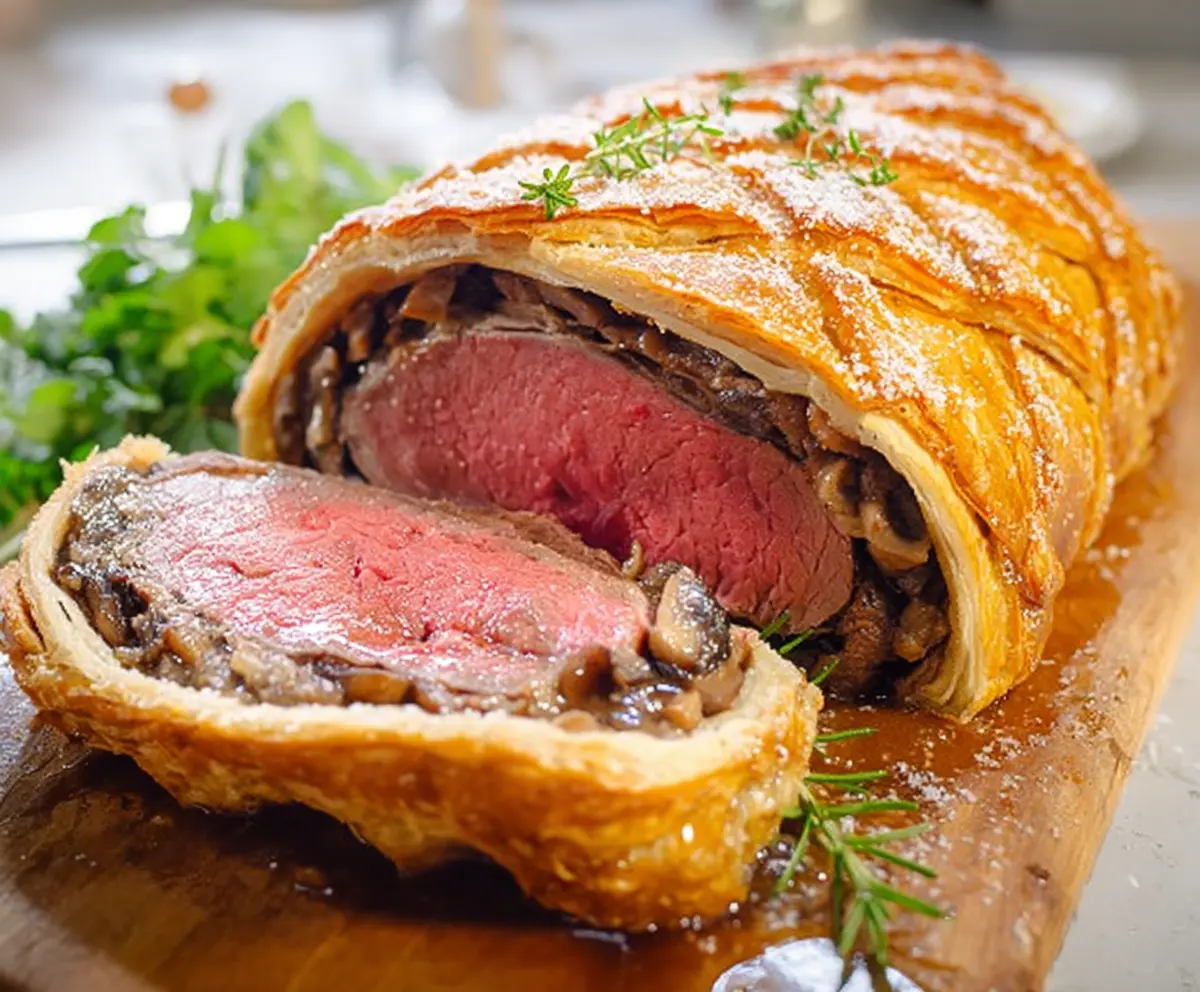
Beef Wellington is a classic dish featuring a tender, juicy beef fillet wrapped in layers of mushroom duxelles and buttery puff pastry. The contrast between the crisp, golden crust and the rich, flavorful beef inside makes it a real treat for special dinners or holiday meals.
I love making Beef Wellington because it feels fancy but is really just a combination of simple ingredients coming together. My favorite tip is to make sure the beef is properly seared and completely cool before wrapping it in the pastry. This helps keep the crust nice and flaky without getting soggy, and it locks in all those deep beef flavors.
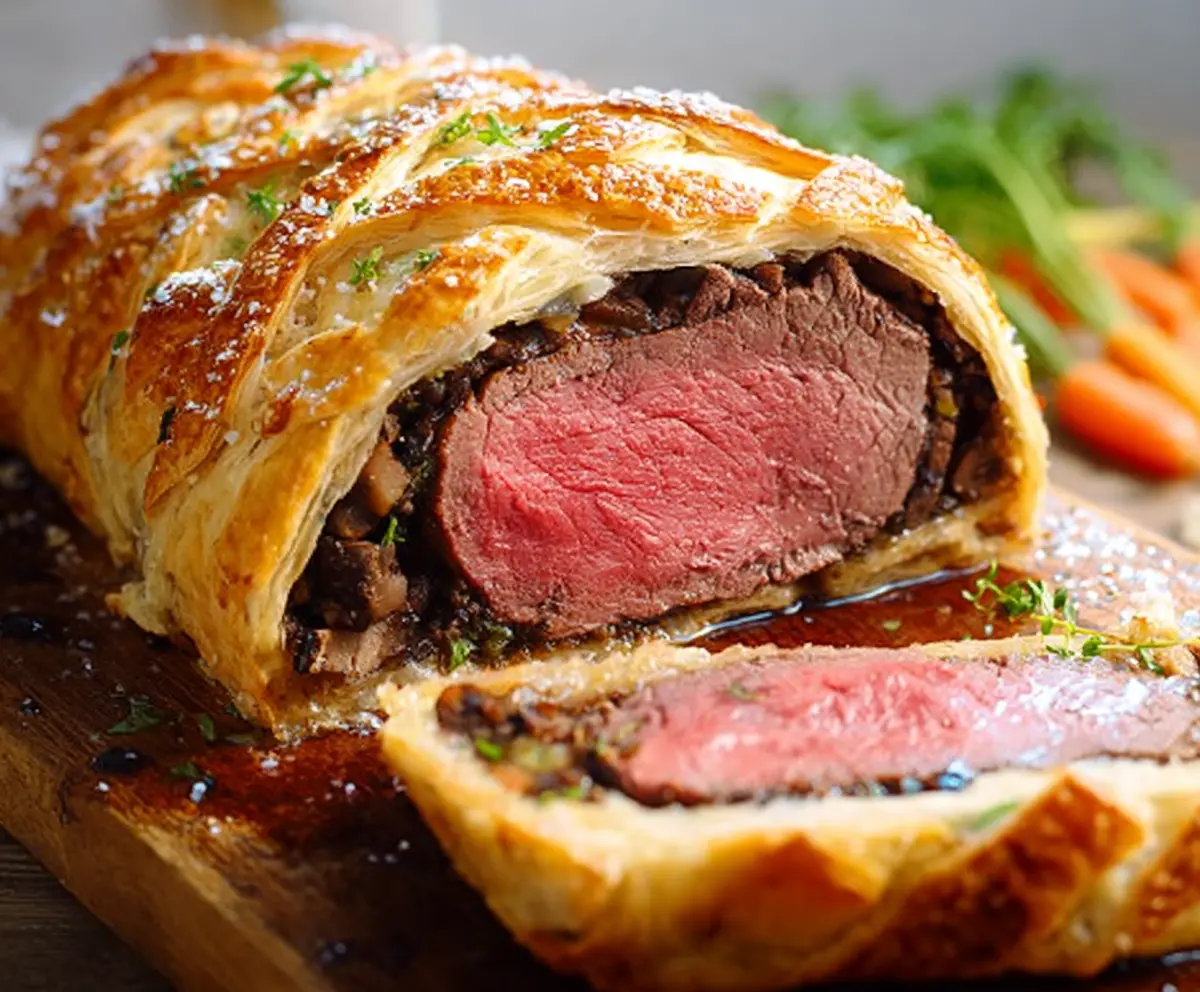
When I serve Beef Wellington, I like to pair it with roasted vegetables and a simple red wine sauce to keep the dish balanced and satisfying. It always brings a bit of excitement to the table, and everyone seems to enjoy the little moment of unveiling the golden pastry to reveal the perfectly cooked beef inside.
Key Ingredients & Substitutions
Beef Tenderloin: This cut is the star—it’s tender and cooks evenly. If you can’t find it, center-cut filet is the closest substitute. Avoid tougher cuts as they won’t stay juicy inside the pastry.
Mushrooms: Cremini or button mushrooms work best for the duxelles. You can mix in some shiitake or portobello for more depth. Make sure to chop finely and cook until all moisture evaporates to avoid sogginess.
Prosciutto: Adds saltiness and keeps moisture away from the pastry. If you can’t find it, thinly sliced ham or pancetta can work well, but the smoky flavor may vary.
Puff Pastry: Use good quality frozen puff pastry for a flaky crust. Thaw it properly before using to avoid cracking. Homemade puff pastry is great if you have time, but store-bought saves effort and works perfectly.
Dijon Mustard: This adds a tangy layer of flavor on the beef and helps tenderize. If you don’t have Dijon, whole grain or spicy mustard would be nice alternatives.
How Do I Keep the Pastry Crispy and Avoid a Soggy Beef Wellington?
Sogginess is a common challenge. Here are tips to avoid it:
- Sear the Beef Well: Browning locks in juices so less liquid escapes during baking.
- Cool the Beef: Chill the beef after searing and mustard brushing. Wrapping cold beef keeps the pastry crisp.
- Cook Mushroom Duxelles Thoroughly: Mushrooms hold water—cook until dry and pasty to avoid steaming the pastry.
- Use Prosciutto Layer: It acts as a moisture barrier between mushroom mix and pastry.
- Chill the Wrapped Beef: Wrapping with plastic wrap and chilling helps firm it up for clean pastry wrapping.
Following these steps ensures your pastry stays golden and crisp, while the beef stays tender and juicy inside.
Equipment You’ll Need
- Heavy skillet – great for searing the beef evenly and getting a nice crust.
- Food processor – makes chopping mushrooms quick and easy for the duxelles.
- Plastic wrap – helps roll the prosciutto and mushroom layers tightly around the beef.
- Baking sheet with parchment paper – ensures the puff pastry doesn’t stick and bakes evenly.
- Pastry brush – perfect for applying the egg wash to get a golden, shiny crust.
- Instant-read thermometer – the best way to get your beef cooked exactly how you like it.
Flavor Variations & Add-Ins
- Swap beef for a large pork tenderloin for a different but still tender center; it cooks a bit quicker.
- Add finely chopped fresh herbs like thyme or parsley to the mushroom duxelles for a fresh flavor boost.
- Mix in some pâté, such as foie gras or mushroom pâté, with the duxelles for extra richness.
- Use a layer of creamed spinach instead of prosciutto for a veggie-packed twist, adding creaminess and flavor.
How to Make Beef Wellington?
Ingredients You’ll Need:
Main Ingredients:
- 1 center-cut beef tenderloin (filet mignon), about 2-2.5 pounds
- Salt and freshly ground black pepper, to taste
- 2 tablespoons olive oil
- 3 tablespoons Dijon mustard
- 10 ounces cremini or button mushrooms, finely chopped
- 2 tablespoons unsalted butter
- 3 cloves garlic, minced
- 1 small shallot, minced
- 6-8 thin slices of prosciutto
- 1 sheet puff pastry (about 14×14 inches), thawed
- 1 egg, beaten (for egg wash)
- Fresh thyme sprigs (optional, for garnish)
- Olive oil or butter for cooking mushrooms and searing beef
How Much Time Will You Need?
This Beef Wellington recipe takes roughly 15 minutes to prepare the ingredients, 40-50 minutes to cook the beef, mushrooms, and bake the pastry, plus about 10 minutes resting time before slicing. Altogether, expect about 1 hour and 15 minutes from start to finish.
Step-by-Step Instructions:
1. Prepare the Beef:
Start by trimming any excess fat and silver skin from the beef tenderloin. Season it generously with salt and pepper. Heat olive oil in a heavy skillet over high heat until just smoking. Sear the beef on all sides for about 2–3 minutes per side, aiming for a nice brown crust. Remove from heat, brush the beef all over with Dijon mustard, then let it cool completely. Chill in the refrigerator for 15–20 minutes to help set the flavors.
2. Make the Mushroom Duxelles:
Place the mushrooms in a food processor and pulse until finely chopped but not pureed. In a skillet, melt the butter with a splash of olive oil over medium heat. Add the minced shallot and garlic and cook until they become translucent. Add the chopped mushrooms and cook, stirring often, until most of the moisture evaporates and the mixture becomes thick and pasty — this should take 10–15 minutes. Season with salt and pepper, then remove from heat and allow to cool.
3. Assemble the Wellington:
Lay a large piece of plastic wrap on your work surface. Arrange the prosciutto slices on the plastic wrap in overlapping layers to form a rectangle large enough to wrap around the beef. Spread the cooled mushroom duxelles evenly over the prosciutto. Place the chilled beef on top of this mushroom layer. Using the plastic wrap, carefully roll the prosciutto and mushroom around the beef tightly, twist the ends of the plastic wrap, and chill for another 15–20 minutes to help it hold shape.
4. Wrap with Puff Pastry:
Preheat your oven to 400°F (200°C). On a floured surface, roll out the puff pastry to a size that will fully encase the beef. Remove the plastic wrap from the beef roll and place it in the center of the pastry. Fold the pastry over the beef, trimming any excess, and seal the edges securely. Place the wrapped beef seam side down on a baking sheet lined with parchment paper. Brush the top with beaten egg to help the pastry turn golden. If you like, lightly score the pastry with a knife to create a decorative pattern and brush again with egg wash.
5. Bake the Wellington:
Bake in the preheated oven for about 25–30 minutes, or until the pastry is a beautiful golden brown. Check the internal temperature of the beef with an instant-read thermometer — it should be around 125°F (51–52°C) for medium-rare. Remove from the oven and let the Wellington rest for 10 minutes to allow the juices to redistribute.
6. Serve and Enjoy:
Slice the Beef Wellington into generous portions and garnish with fresh thyme if you wish. Serve with your favorite sides like roasted vegetables or a rich red wine sauce. Enjoy a truly special meal!
Can I Make Beef Wellington Ahead of Time?
Yes! You can prepare the beef, mushroom duxelles, and even assemble the wrapped Wellington a day ahead. Keep it tightly wrapped in plastic wrap and store it in the fridge. When ready, bake as directed, adding a few extra minutes if baking straight from the fridge.
Can I Use Frozen Puff Pastry?
Definitely. Just be sure to thaw the puff pastry completely in the fridge before rolling it out to avoid cracking. Work quickly with it at a cool temperature for the best puff and flakiness.
How Do I Know When the Beef is Cooked Perfectly?
The best way is using an instant-read thermometer. For medium-rare, look for an internal temperature around 125°F (51-52°C) when you pull it from the oven. The meat will continue to cook slightly while resting.
What Can I Substitute for Prosciutto?
If prosciutto isn’t available, thinly sliced ham or pancetta are good alternatives. Just keep in mind these will change the flavor profile a bit, but still help with moisture control and add saltiness.